












CONFIRMED PARTICIPANTS
Quorum
 |
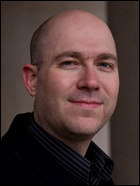 |
Alán Aspuru-Guzik Associate Professor, Department of Chemistry and Chemical Biology Harvard University Alán Aspuru-Guzik is a pioneering chemist working on next generation solar technology. Aspuru-Guzik blends quantum mechanics with theoretical chemistry to better understand how plants absorb energy from the sun so that we can develop cheaper and more efficient photovoltaics. In 2008, he founded the Clean Energy Project at Harvard to simulate chemistry on computers across a global grid to discover the best molecules for organic photovoltaics, fuel cells and energy storage technologies. After studying chemistry in Mexico, Aspuru-Guzik received his PhD from University of California Berkeley in 2004. For the last five years, he has been a professor at Harvard. Recently, MIT’s Technology Review named Aspuru-Guzik one of the 35 Top Innovators Under 35 for his outstanding career accomplishments. He has received numerous awards recognizing his academic potential and early successes, including the HP Outstanding Junior Faculty Award, Everett Mendelsohn Excellence in Mentoring Award at Harvard, and the Young Faculty Award from the Defense Advanced Research Projects Agency. |
|
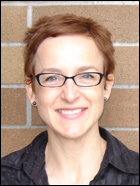 |
Jillian Buriak Canada Research Chair in Nanomaterials Professor, Department of Chemistry University of Alberta National Institute for Nanotechnology, National Research Council Dr. Jillian Buriak is manipulating nanomaterials in a whole new way to create next-generation photovoltaic technology. Through an innovative multidisciplinary approach with university and government collaborators from various fields, as well as an industry partner, Dr. Buriak is improving the efficiency of our existing solar cells and finding cheaper and better materials to make them. Named a Canada Research Chair in 2004, her research into the smallest matter is having an enormous impact on multiple fields, including renewable energy, oil sands extraction and the treatment of Multiple Sclerosis. In addition to her role at the University of Alberta, Dr. Buriak is also the Senior Research Officer at the National Institute for Nanotechnology and in 2007 she was appointed to the Natural Sciences and Engineering Research Council of Canada. She received her PhD in 1995 from the Université Louis Pasteur in France. Dr. Buriak has won numerous awards for her distinguished career and numerous breakthroughs, including the Rutherford Medal of the Royal Society of Canada in 2005, American Chemical Society Pure Chemistry Award in 2003, and was named one of Canada’s Top 40 under 40 in 2004. |
|
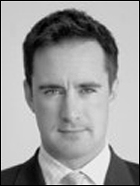 |
Craig Dunn Chief Operating Officer Borealis GeoPower Craig Dunn is a strong advocate for “Big G” geothermal – tapping into high-temperature geothermal resources deep within the earth for clean, quiet and virtually inexhaustible sources of energy. His company, Borealis GeoPower is breaking new ground in Canada by exploring the potential for large-scale geothermal development in Alberta, British Columbia and remote northern communities. He believes Canada’s fledgling geothermal industry can reach new heights through public awareness, policy changes and investor education. A passionate outdoorsman, Mr. Dunn began his career in the energy industry providing environmental audits and remediation services. Through his work with various mining and energy companies, he quickly became a leader in geological exploration across Western Canada. In 2003, he established WellDunn Consulting, a geological consulting firm for the oil and gas industry and multiple geothermal exploration projects in the U.S. and Canada. Mr. Dunn was one of the key players involved in the resurgence of the Canadian Geothermal Energy Association (CanGEA), where he co-authored the Geothermal Policy Best Practices in 2009. He continues to work with CanGEA to establish education programs and a national study for geothermal potential in Canada. Mr. Dunn lives in Calgary, Alberta. |
|
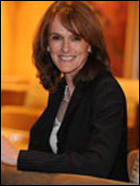 |
Cathy Foley Deputy Chief – Science, Material Science and Engineering Division CSIRO Dr. Cathy Foley is an Australian physicist whose work in superconductivity could lead to technological leaps in how we produce and distribute electricity. Along with practical applications for mineral exploration and electricity transmission, her research is bringing us closer to the development of fusion as a groundbreaking future energy source. Dr. Foley is head of the Material Science and Engineering Division at Australia’s national science agency, CSIRO, where she sets research strategies and works tirelessly to promote science. She was the first female head of the Australian Institute of Physics which she led from 2007 to 2009, as well as the 2009 recipient of a Nokia Business Innovation Award. She is the current president of the Federation of Australian Scientific and Technological Societies, which represents the interests of some 68,000 Australian scientists within public policy. Dr. Foley received her PhD from Macquarie University in 1985, as well a Diploma in Education. She has a world-class reputation in her field and has received numerous awards for her support of scientific progress, science education, and promotion of women in science, including a Public Service Medal in the 2003 Australia Day Honours and a Eureka Prize. |
|
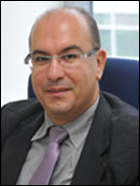 |
Yacine Kadi Project Leader CERN Professor, Department of Energy Science Sungkyunkwan University, Korea Dr. Yacine Kadi is leading efforts to build next-generation nuclear reactors that use new types of fuel and eat their own waste. Dr. Kadi is an applied physicist at CERN, the European Organization for Nuclear Research, where he investigates how we can use thorium to create safe, abundant sources of energy for a fraction the size and cost of traditional nuclear reactors. He served on a Thorium Report Committee for the Research Council of Norway from 2007 to 2008 that studied the potential for accelerator-driven systems based on thorium. He continues his work both at CERN and at Sungkyunkwan University in Korea where he holds professorship. Dr. Kadi is a strong proponent of thorium-based progress in energy generation, and he has advised the South Korean government on the possibility of developing reactors for the United Arab Emirates. In the late 1990s working with Carlo Rubbia, the 1984 Nobel Prize winner in Physics, Dr. Kadi explored the link between energy research and application in the Emerging Energy Technologies Group at CERN. Dr. Kadi received his PhD in Nuclear Reactor Physics from the Université de Provence in France in 1995. |
|
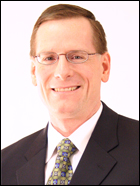 |
Greg Naterer Canada Research Chair in Advanced Energy Systems Associate Dean, Faculty of Engineering and Applied Science University of Ontario Institute of Technology Much of Dr. Greg Naterer’s work lies within the realm of thermodynamics, where he believes tools can be created to overcome the tremendous energy waste that exists in today’s technologies. He uses leading edge science to improve energy efficiency in power generation and distribution systems, from fluid systems to heat exchangers. As a Tier 1 Canada Research Chair in Advanced Energy Systems, Dr. Naterer is collaborating with Atomic Energy of Canada Ltd. and other partners to find better ways to produce hydrogen from water, which can later be coupled with solar or nuclear methods for cheaper, large-scale production of hydrogen. His team also uses nanotechnology to develop new ways to replace or extend the lives of batteries in applications such as bio sensors and exhaust heat recovery systems in hybrid vehicles. In 2010, Dr. Naterer received a major grant to further his work on heat transfer and energy efficiency through NSERC’s Discovery Grant competition in Mechanical Engineering. Dr. Naterer is a Fellow of the Canadian Society for Mechanical Engineering (CSME), American Society for Mechanical Engineering (ASME) and Engineering Institute of Canada (EIC). He received his PhD in Mechanical Engineering from the University of Waterloo in 1995. |
|
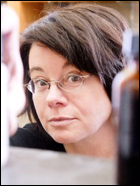 |
Linda Nazar Canada Research Chair in Solid State Materials Professor, Department of Chemistry/Department of Electrical & Computer Engineering University of Waterloo Dr. Linda Nazar is passionate about shifting how we look at energy to deal with our global climate change crisis. She investigates new nanomaterials that could fundamentally change the efficiency of how we store electricity, and the rate at which it can be stored and discharged. As a world leader in inorganic materials research, her work focuses on overcoming the large-scale implementation challenges posed by current lithium-ion solutions. She is developing energy storage devices to better store the intermittent power from renewable sources, such as solar and wind, and for various electric car power enhancements. Since 2004, Dr. Nazar has held a Tier 1 Canada Research Chair in Solid State Materials. She also teaches chemistry and electrical engineering at the University of Waterloo, and prior to that received her PhD from the University of Toronto. Dr. Nazar received the Electrochemical Society International Battery Division Award in 2009, was the 2010 Moore Distinguished Scholar at the California Institute of Technology and was recently named the 2011 Rio Tinto Alcan award-winner for her research in inorganic electrochemistry. |
|
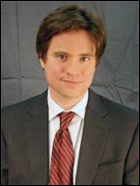 |
Bill Rosehart Professor and Department Head, Department of Electrical and Computer Engineering University of Calgary As an expert in complex power systems, Dr. Bill Rosehart is preparing our electrical system for a whole new wave of renewable technologies. His research investigates the electrical system as a whole, with a focus on making it more efficient, reliable, and secure. This research is increasingly vital to the ongoing shifts in the electrical landscape – including deregulation and an energy mix that increasingly incorporates renewable and "smart" technologies. His research areas include optimizing energy systems, controlling wind-based energy production, and studying the benefits of distributed generation. Dr. Rosehart received a number of early career awards, including recognition as one of Calgary’s Top 40 under 40 in 2007 by Calgary Inc. magazine and the Award for Early Achievement from the Association of Professional Engineers, Geologists and Geophysicists of Alberta. He holds a Professional Engineer designation and earned his PhD in Electrical Engineering from the University of Waterloo. |
|
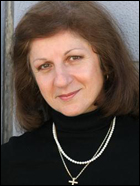 |
Maria Skyllas-Kazacos Professor Emeritus, School of Chemical Sciences and Engineering University of New South Wales Dr. Maria Skyllas-Kazacos is a chemical engineer whose invention of the Vanadium Redox Battery (VRB) in the late 1980s may revolutionize how we store energy. The VRB is a unique type of flow battery that can repeatedly absorb and release huge amounts of electricity, making them possibly the best partner for renewable energy. Over the last twenty years, Dr. Skyllas-Kazacos has been improving the technology and finding commercial applications in various markets to reduce the cost and make the VRB a feasible solution to our energy storage challenges. Dr. Skyllas-Kazacos’ VRB technology can already be found in action in Japan, USA, Europe, and Australia for storing wind and solar energy and balancing peak electricity demand. Dr. Skyllas-Kazacos recently joined the Advisory Board for Apella Resources Inc. to help grow their presence in the vanadium markets. She is Professor Emeritus for the University of New South Wales in Australia where she received her PhD in 1978. As a distinguished academic, Dr. Skyllas-Kazacos has won numerous awards for her research including the R.K. Murphy Medal from the Royal Australian Chemical Institute in 2000 and the Order of Australia in 1999. |
|
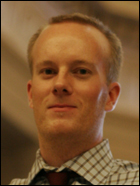 |
Ted Sargent Canada Research Chair in Nanotechnology Professor, Department of Electrical & Computer Engineering University of Toronto A Canada Research Chair in Nanotechnology, Ted Sargent’s investigations on the nanometer frontier are leading to a new era of inexpensive and efficient solar cells. His paint-on solar cells are transforming how we harvest the sun’s energy by tapping into invisible infrared rays to produce electricity on cloudy days. Sargent is also Founder and CTO at InVisage Technologies, a company that is working toward bringing QuantumFilm™ – an advanced image sensor technology – to market. Sargent serves as Associate Chair for Research in the Department of Electrical and Computer Engineering at the University of Toronto, where he received his PhD in 1998. He was named one of the world’s top innovators by MIT’s Technology Review in 2003 and a research leader in the Scientific American 50 in 2005. In recent years, Sargent was named Fellow of the American Association for the Advancement of Science, an Investigator for KAUST in Saudi Arabia, and authored a book, The Dance of Molecules: How Technology is Changing Our Lives (2005). |
|