


















EQUINOX SUMMIT PARTICIPANTS
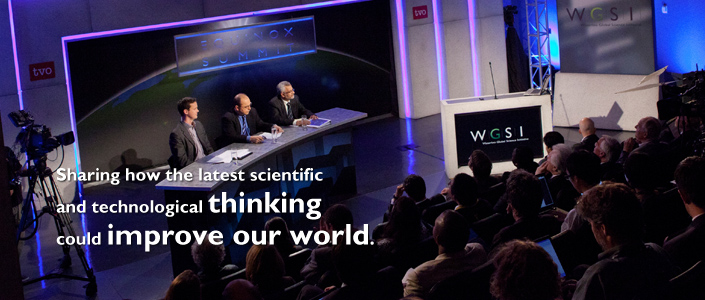
The Equinox Summit: Energy 2030 brought together leading scientists (known as the Quorum), future leaders (called the Forum), and experienced Advisors from policy, investment and business to explore how cutting edge science and technology can help us move towards a low carbon energy future.
Quorum | Forum | Advisors | Speakers
QUORUM

|
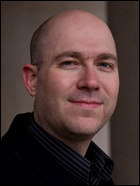 |
Alán Aspuru-Guzik Associate Professor, Department of Chemistry and Chemical Biology Harvard University Alán Aspuru-Guzik is a pioneering chemist working on next generation solar technology. Aspuru-Guzik blends quantum mechanics with theoretical chemistry to better understand how plants absorb energy from the sun so that we can develop cheaper and more efficient photovoltaics. In 2008, he founded the Clean Energy Project at Harvard to simulate chemistry on computers across a global grid to discover the best molecules for organic photovoltaics, fuel cells and energy storage technologies. After studying chemistry in Mexico, Aspuru-Guzik received his PhD from University of California Berkeley in 2004. For the last five years, he has been a professor at Harvard. Recently, MIT’s Technology Review named Aspuru-Guzik one of the 35 Top Innovators Under 35 for his outstanding career accomplishments. He has received numerous awards recognizing his academic potential and early successes, including the HP Outstanding Junior Faculty Award, Everett Mendelsohn Excellence in Mentoring Award at Harvard, and the Young Faculty Award from the Defense Advanced Research Projects Agency. |
|
|
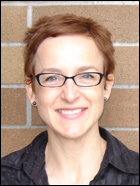 |
Jillian Buriak Canada Research Chair in Nanomaterials Professor, Department of Chemistry University of Alberta National Institute for Nanotechnology, National Research Council Dr. Jillian Buriak is manipulating nanomaterials in a whole new way to create next-generation photovoltaic technology. Through an innovative multidisciplinary approach with university and government collaborators from various fields, as well as an industry partner, Dr. Buriak is improving the efficiency of our existing solar cells and finding cheaper and better materials to make them. Named a Canada Research Chair in 2004, her research into the smallest matter is having an enormous impact on multiple fields, including renewable energy, oil sands extraction and the treatment of Multiple Sclerosis. In addition to her role at the University of Alberta, Dr. Buriak is also the Senior Research Officer at the National Institute for Nanotechnology and in 2007 she was appointed to the Natural Sciences and Engineering Research Council of Canada. She received her PhD in 1995 from the Université Louis Pasteur in France. Dr. Buriak has won numerous awards for her distinguished career and numerous breakthroughs, including the Rutherford Medal of the Royal Society of Canada in 2005, American Chemical Society Pure Chemistry Award in 2003, and was named one of Canada’s Top 40 under 40 in 2004. |
|
|
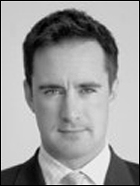 |
Craig Dunn Chief Operating Officer Borealis GeoPower Craig Dunn is a strong advocate for “Big G” geothermal – tapping into high-temperature geothermal resources deep within the earth for clean, quiet and virtually inexhaustible sources of energy. His company, Borealis GeoPower is breaking new ground in Canada by exploring the potential for large-scale geothermal development in Alberta, British Columbia and remote northern communities. He believes Canada’s fledgling geothermal industry can reach new heights through public awareness, policy changes and investor education. A passionate outdoorsman, Mr. Dunn began his career in the energy industry providing environmental audits and remediation services. Through his work with various mining and energy companies, he quickly became a leader in geological exploration across Western Canada. In 2003, he established WellDunn Consulting, a geological consulting firm for the oil and gas industry and multiple geothermal exploration projects in the U.S. and Canada. Mr. Dunn was one of the key players involved in the resurgence of the Canadian Geothermal Energy Association (CanGEA), where he co-authored the Geothermal Policy Best Practices in 2009. He continues to work with CanGEA to establish education programs and a national study for geothermal potential in Canada. Mr. Dunn lives in Calgary, Alberta. |
|
|
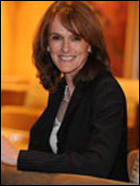 |
Cathy Foley Deputy Chief – Science, Material Science and Engineering Division CSIRO Dr. Cathy Foley is an Australian physicist whose work in superconductivity could lead to technological leaps in how we produce and distribute electricity. Along with practical applications for mineral exploration and electricity transmission, her research is bringing us closer to the development of fusion as a groundbreaking future energy source. Dr. Foley is head of the Material Science and Engineering Division at Australia’s national science agency, CSIRO, where she sets research strategies and works tirelessly to promote science. She was the first female head of the Australian Institute of Physics which she led from 2007 to 2009, as well as the 2009 recipient of a Nokia Business Innovation Award. She is the current president of the Federation of Australian Scientific and Technological Societies, which represents the interests of some 68,000 Australian scientists within public policy. Dr. Foley received her PhD from Macquarie University in 1985, as well a Diploma in Education. She has a world-class reputation in her field and has received numerous awards for her support of scientific progress, science education, and promotion of women in science, including a Public Service Medal in the 2003 Australia Day Honours and a Eureka Prize. |
|
|
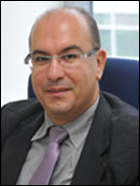 |
Yacine Kadi Project Leader CERN Professor, Department of Energy Science Sungkyunkwan University, Korea Dr. Yacine Kadi is leading efforts to build next-generation nuclear reactors that use new types of fuel and eat their own waste. Dr. Kadi is an applied physicist at CERN, the European Organization for Nuclear Research, where he investigates how we can use thorium to create safe, abundant sources of energy for a fraction the size and cost of traditional nuclear reactors. He served on a Thorium Report Committee for the Research Council of Norway from 2007 to 2008 that studied the potential for accelerator-driven systems based on thorium. He continues his work both at CERN and at Sungkyunkwan University in Korea where he holds professorship. Dr. Kadi is a strong proponent of thorium-based progress in energy generation, and he has advised the South Korean government on the possibility of developing reactors for the United Arab Emirates. In the late 1990s working with Carlo Rubbia, the 1984 Nobel Prize winner in Physics, Dr. Kadi explored the link between energy research and application in the Emerging Energy Technologies Group at CERN. Dr. Kadi received his PhD in Nuclear Reactor Physics from the Université de Provence in France in 1995. |
|
|
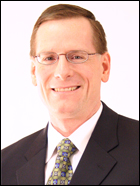 |
Greg Naterer Canada Research Chair in Advanced Energy Systems Associate Dean, Faculty of Engineering and Applied Science University of Ontario Institute of Technology Much of Dr. Greg Naterer’s work lies within the realm of thermodynamics, where he believes tools can be created to overcome the tremendous energy waste that exists in today’s technologies. He uses leading edge science to improve energy efficiency in power generation and distribution systems, from fluid systems to heat exchangers. As a Tier 1 Canada Research Chair in Advanced Energy Systems, Dr. Naterer is collaborating with Atomic Energy of Canada Ltd. and other partners to find better ways to produce hydrogen from water, which can later be coupled with solar or nuclear methods for cheaper, large-scale production of hydrogen. His team also uses nanotechnology to develop new ways to replace or extend the lives of batteries in applications such as bio sensors and exhaust heat recovery systems in hybrid vehicles. In 2010, Dr. Naterer received a major grant to further his work on heat transfer and energy efficiency through NSERC’s Discovery Grant competition in Mechanical Engineering. Dr. Naterer is a Fellow of the Canadian Society for Mechanical Engineering (CSME), American Society for Mechanical Engineering (ASME) and Engineering Institute of Canada (EIC). He received his PhD in Mechanical Engineering from the University of Waterloo in 1995. |
|
|
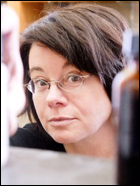 |
Linda Nazar Canada Research Chair in Solid State Materials Professor, Department of Chemistry/Department of Electrical & Computer Engineering University of Waterloo Dr. Linda Nazar is passionate about shifting how we look at energy to deal with our global climate change crisis. She investigates new nanomaterials that could fundamentally change the efficiency of how we store electricity, and the rate at which it can be stored and discharged. As a world leader in inorganic materials research, her work focuses on overcoming the large-scale implementation challenges posed by current lithium-ion solutions. She is developing energy storage devices to better store the intermittent power from renewable sources, such as solar and wind, and for various electric car power enhancements. Since 2004, Dr. Nazar has held a Tier 1 Canada Research Chair in Solid State Materials. She also teaches chemistry and electrical engineering at the University of Waterloo, and prior to that received her PhD from the University of Toronto. Dr. Nazar received the Electrochemical Society International Battery Division Award in 2009, was the 2010 Moore Distinguished Scholar at the California Institute of Technology and was recently named the 2011 Rio Tinto Alcan award-winner for her research in inorganic electrochemistry. |
|
|
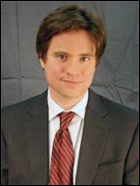 |
Bill Rosehart Professor and Department Head, Department of Electrical and Computer Engineering University of Calgary As an expert in complex power systems, Dr. Bill Rosehart is preparing our electrical system for a whole new wave of renewable technologies. His research investigates the electrical system as a whole, with a focus on making it more efficient, reliable, and secure. This research is increasingly vital to the ongoing shifts in the electrical landscape – including deregulation and an energy mix that increasingly incorporates renewable and "smart" technologies. His research areas include optimizing energy systems, controlling wind-based energy production, and studying the benefits of distributed generation. Dr. Rosehart received a number of early career awards, including recognition as one of Calgary’s Top 40 under 40 in 2007 by Calgary Inc. magazine and the Award for Early Achievement from the Association of Professional Engineers, Geologists and Geophysicists of Alberta. He holds a Professional Engineer designation and earned his PhD in Electrical Engineering from the University of Waterloo. |
|
|
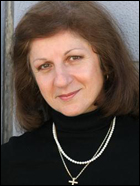 |
Maria Skyllas-Kazacos Professor Emeritus, School of Chemical Sciences and Engineering University of New South Wales Dr. Maria Skyllas-Kazacos is a chemical engineer whose invention of the Vanadium Redox Battery (VRB) in the late 1980s may revolutionize how we store energy. The VRB is a unique type of flow battery that can repeatedly absorb and release huge amounts of electricity, making them possibly the best partner for renewable energy. Over the last twenty years, Dr. Skyllas-Kazacos has been improving the technology and finding commercial applications in various markets to reduce the cost and make the VRB a feasible solution to our energy storage challenges. Dr. Skyllas-Kazacos’ VRB technology can already be found in action in Japan, USA, Europe, and Australia for storing wind and solar energy and balancing peak electricity demand. Dr. Skyllas-Kazacos recently joined the Advisory Board for Apella Resources Inc. to help grow their presence in the vanadium markets. She is Professor Emeritus for the University of New South Wales in Australia where she received her PhD in 1978. As a distinguished academic, Dr. Skyllas-Kazacos has won numerous awards for her research including the R.K. Murphy Medal from the Royal Australian Chemical Institute in 2000 and the Order of Australia in 1999. |
|
|
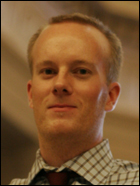 |
Ted Sargent Canada Research Chair in Nanotechnology Professor, Department of Electrical & Computer Engineering University of Toronto A Canada Research Chair in Nanotechnology, Ted Sargent’s investigations on the nanometer frontier are leading to a new era of inexpensive and efficient solar cells. His paint-on solar cells are transforming how we harvest the sun’s energy by tapping into invisible infrared rays to produce electricity on cloudy days. Sargent is also Founder and CTO at InVisage Technologies, a company that is working toward bringing QuantumFilm™ – an advanced image sensor technology – to market. Sargent serves as Associate Chair for Research in the Department of Electrical and Computer Engineering at the University of Toronto, where he received his PhD in 1998. He was named one of the world’s top innovators by MIT’s Technology Review in 2003 and a research leader in the Scientific American 50 in 2005. In recent years, Sargent was named Fellow of the American Association for the Advancement of Science, an Investigator for KAUST in Saudi Arabia, and authored a book, The Dance of Molecules: How Technology is Changing Our Lives (2005). |
FORUM
|
|
 |
Esther Adedeji Project Officer with Sustainable Research and Action for Environmental Development Nigeria Adedeji has a Bachelor of Science in Chemical Sciences from the University of Agriculture, Abeokuta, Nigeria and a Master of Environmental Management degree from the University of Lagos, Lagos, Nigeria. She recently completed a certificate in climate change adaptation in agriculture and natural resource management at Addis Ababa University, Ethiopia. Currently, Adedeji is engaged in a project to improve the health and socioeconomic status of people working in sawmills. |
|
|
 |
Zoë Caron Climate Policy and Advocacy Specialist for World Wildlife Fund Canada Toronto, Canada Caron has been captivated by energy since seeing the tremendous power of nature harnessed at a hydroelectric dam when she was eight years old. She co-authored Global Warming for Dummies with Green Party of Canada Leader Elizabeth May. Her passion and expertise in renewable energies has garnered her recognition from ELLE magazine, Alternatives Journal, Vanity Fair, and Green Living Magazine. |
|
|
 |
Will Catton Physics Ph.D. Candidate at the University of Otago New Zealand Catton did his bachelor’s and master’s degree in physics at the University of Cambridge, before returning to New Zealand to study energy efficiency issues. His article “Progress, Laughter, Sex (but not in that order)” describes the importance of humor in human evolution and won the 2008 NZ Royal Society Manhire Prize for Creative Science Writing in non-fiction. And, he can juggle five balls. |
|
|
 |
Kerry Cheung Science and Technology Policy Fellow for the American Association for the Advancement of Science Washington, D.C., United States Cheung was awarded both a master’s and a PhD in Electrical Engineering and Computer Science from the Massachusetts Institute of Technology, Boston, and his Bachelor’s degree in Applied Engineering Physics from Cornell University, New York. His AAAS fellowship placement is with the U.S. Department of Energy where he examines the development of smart grid technology. He also helped organize the Silkscreens Film Festival that over two days attracted 500 attendees. |
|
|
 |
Felipe De Leon Carbon Advisor for Anaconda Carbon based in Central America Escazu, Costa Rica For over five years De Leon has developed clean energy projects throughout Central America as part of the Kyoto Protocol’s Clean Development Mechanism, including three wind power projects, two hydropower projects, and the development of the Colombian carbon market. He studied industrial engineering at the Universidad Interamericana de Costa Rica and Sustainable Management at the Instituto Centroamericano de Administracion de Empresas. He is also involved in recording independent music at Conquista Records recording studio. |
|
|
 |
Lia Helena Demange Lawyer Brazil Demange is studying toward a Masters in Environmental Law at Pace University in New York State. She received her law degree from the University of São Paulo, Brazil. A passionate advocate for sustainability, Demange has served as Advisor to the Caribbean Community (CARICOM) through the United Nations and a legal consultant to Institute Brasil Ambiente. |
|
|
 |
Jian hua Ding Researcher for China Urban Construction and Development Research and Engineering Institute Beijing, China As part of her current position, Ding drafted the section on waste management and greenhouse gas emission for “China Low-carbon Eco-city Development Report 2011” that will be used by the Chinese Ministry of Housing, Urban and Rural Development as national policy. She studied Chinese Language and Literature at the Beijing International Studies University, Beijing, China before receiving a M.A. in International Environmental Policy from the Monterey Institute of International Studies, Monterey, California. |
|
|
 |
Aaron Leopold Energy and Transport Expert for International Institute for Sustainable Development New York, United States Leopold received his Bachelor’s degree from the University of Buffalo and a Master’s in Global Political Economy from the University of Kassel in Germany. He is currently pursuing his PhD in Environmental Politics at the Hemlholtz Centre for Environmental Research at the University of Kassel where his thesis is investigating the “food versus fuel” biofuel debate in Brazil, Europe, and the United States. |
|
|
 |
Marc McArthur Manager for Ottawa Cleantech Initiative Ottawa, Canada McArthur studied Mechanical Engineering at Carleton University, Ottawa, Canada. He co-organized the first Canadian Cleantech Summit in April 2010 in Ottawa with 250 national and international attendees. Plus, he co-created Impact Magazine, a biannual, bilingual magazine that covers the cleantech sector in Canada. In addition to cleantech he also has a genuine interest in martial arts and taught high school physics, chemistry and math at age 19. |
|
|
 |
Jakob Nygard Working toward M.Sc. Student in Political Science at the University of Copenhagen Copenhagen, Denmark Nygard is studying political science, global energy governance, and environmental law at the University of Copenhagen, with time spent studying at the University of California at Berkeley. In September, he will be researching and analyzing environmental and energy policy for the European Parliament in Brussels. Nygard is an avid sailor and spent six weeks as a crewmember sailing the two-mast yawl, Nordkaperen. |
|
|
 |
Lauren Riga Assistant Director for the Environmental Law & Economics Institute United States Riga is a United Nations Delegate and actively preparing for the upcoming sessions of the United Nations Commission on Sustainable Development. She trained the international youth caucus facilitators for the previous United Nations Climate Change Conference in 2010. She obtained her Master of Science in International Commerce and Policy with an emphasis on global energy from Valparaiso University, Indiana and a Bachelor’s in Political Science and Communications from Rollins College, Florida. |
|
|
 |
Vagish Sharma Senior Executive for Energy Operations and Management, Jagurih Group New Delhi, India Sharma’s position with Jagurih has him responsible for strategic planning on climate change mitigation, carbon financing, and the development of renewable energy in India. He received a Master’s of Technology in Environmental Biotechnology with specialization in Energy and Climate Change Policy Management at Amity University in Noida, India. His research on microbial fuel cells won him a Young Entrepreneur selection in 2009 and 2010 by the Indian Department of Biotechnology. |
|
|
 |
Ted Sherk Project Coordinator for Sustainable Technologies at the Toronto and Region Conservation Authority Toronto, Canada Sherk received a Master’s in Environmental Studies as well as a Bachelor’s Degree in Statistics from the University of Waterloo. His thesis examined the difference in energy use for Ontario households that adopt solar energy projects versus non-adopters. He financed much of his university expenses by playing classic and jazz bass for local groups. |
|
|
| Gita Syahrani Legal Advocate for DNC Law Firm Jakarta, Indonesia Syahrani has studied international, energy, and environmental law and policy at the University of Padjadjaran, Bandung, Indonesia and the University of Dundee, Dundee, Scotland. Through DNC she has advised the Indonesian government on a national low carbon and clean energy investment strategy. In addition to law, she has produced, announced, and written a variety of TV and radio shows. |
|
|
 |
Jose Maria Valenzuela Visiting Fellow at the Climate Policy Initiative at Tsinghua University Beijing, China As an observer at the recent UN Framework Convention on Climate Change meeting in Cancun, Valenzuela was chosen to deliver the final message on behalf of the Research and Independent NGO constituency. He received his undergraduate degree from El Colegio de Mexico, Mexico City and a Master in International Development at Tsinghua University, Beijing, China where he examined low carbon development pathways for Mexico and China. |
|
|
 |
Wei Wei Project Manager for the China Youth Climate Action Network Beijing, China Wei studied economics and business at Beijing’s Capital University of Economics and Business, where one of his projects investigated heavy polluters and how the government should levy environmental taxes. He represented Greenpeace China at the 2009 United Nations Climate Change Conference in Copenhagen. He begins a master’s degree in Public Affairs from Columbia University this fall. |
|
|
| Arthur Yip Technical Business Analyst Assistant for the National Research Council (Canada) Industrial Research Assistance Program Canada As an intern at NRC-IRAP, Yip assists in providing advisory services to the clean energy technology and innovation cluster in Vancouver, Canada. He has also had other work experiences at the Ontario Ministry of the Environment and Natural Resources Canada. He studies chemical engineering and geography and leads local Engineers Without Borders Canada initiatives at the University of Waterloo, Canada. |
ADVISORS
|
|
 |
Jay Apt Professor of Technology, Tepper School of Business & Engineering and Public Policy Executive Director, Carnegie Mellon Electricity Industry Center Carnegie Mellon University As Executive Director and Professor of Technology at the Carnegie Mellon Electricity Centre, Dr. Jay Apt works to improve public policy surrounding electrical advancements and the economics of technical innovation. Dr. Apt has extensive experience researching and teaching in engineering systems design and risk management policy, and assists Carnegie Mellon with important investigations into the electricity industry that influence policy makers and the energy industry decision makers. From 1976 to 1980, Dr. Apt was a staff member of the Centre for Earth and Planetary Physics at Harvard University, which led him to a long and eventful career with NASA; first as a researcher, then Director of NASA’s Jet Propulsion Laboratory at the Table Mountain Observatory, and later as an astronaut. Between 1985 and 1997, he took part in four space shuttle missions – involving two space walks – and has flown around Earth 562 times. In 1997, Dr. Apt received the NASA Distinguished Service Medal. More recent awards include the 2002 Metcalf Lifetime Achievement Award for significant contributions to engineering and a Fellowship from The Explorers Club in 2008. Dr. Apt is an avid pilot, and has logged thousands of hours flying in approximately 25 different types of airplanes, seaplanes, sailplanes, and human-powered aircrafts. |
|
|
 |
Robin Batterham President Australian Academy of Technological Sciences and Engineers (ATSE) Former Chief Scientist of Australia Former Chief Scientist, Rio Tinto Dr. Robin Batterham combines chemical engineering, sustainability practices and a fascination with minerals to guide government and industry in how they act on and carry out basic research. From 1999 to 2006, Dr. Batterham was Chief Scientist of Australia and advised major governmental bodies on a wide range of scientific programs, and produced a widely accepted blueprint for how the Australian government could support research in the early years of the twenty-first century. In tandem, he served as Chief Technologist for the multinational mining company Rio Tinto, where he greatly improved and further developed their industrial technology processes and equipment. Throughout his career, Dr. Batterham has worked intimately with minerals, developing a number of novel processes which are still used today in the mineral sector across the world. Today, Dr. Batterham is Kernot Professor of Engineering at the University of Melbourne and the President of the Australian Academy of Technological Sciences and Engineering (ATSE). Dr. Batterham received his PhD from the University of Melbourne. He is also an accomplished organist and has performed in major cities around the world. |
|
|
 |
Jason Blackstock Equinox Summit Forum Peer Advisor Senior Fellow for Energy and the Environment Centre for International Governance Innovation Research Scholar International Institute for Applied Systems Analysis Dr. Jason Blackstock investigates the intersection of science and international affairs as it applies to global climate, energy systems and nanotechnology. His research in geoengineering focuses on better understanding the risks and scientific, political and global governance of emerging technologies. His recent publications include "Towards a people-centered framework for geoengineering governance: a humanitarian perspective" in Geoengineering Quarterly (March 2010), "The politics of geoengineering" in Science (January 2010) and "Climate Engineering Responses to Climate Emergencies" in Novim (July 2009). Dr. Blackstock splits his time between the Centre for International Governance Innovation in Waterloo, Ontario, Canada and the International Institute for Applied Systems Analysis in Austria. He is also an Associate Fellow of the World Academy of Arts and Science, and an Adjunct Assistant Professor at the Social Innovation Generation, University of Waterloo. From 2003 to 2007, he was a Research Associate with the Quantum Science Research group of Hewlett Packard Laboratories in Silicon Valley, where he developed nanoscale electronic and sensor technologies. Dr. Blackstock earned his PhD in physics from the University of Alberta in 2005, as well as a Graduate Certificate in International Security from Stanford and a Master of Public Administration from Harvard University. |
|
|
 |
Barry Brook Sir Hubert Wilkins Chair of Climate Change Director, The Environment Institute University of Adelaide Dr. Barry Brook is a leading environmental and energy expert who believes in the power of effective communication for a sustainable future. Dr. Brook looks at how we’re treating the planet today, and what it means for our tomorrow. He focuses on ecological systems, conservation biology, climate change impacts and prospective energy systems, with a preference for employing an energy mix of nuclear and renewable sources. Dr. Brook works tirelessly to promote hard-won technical science to policymakers, industry heads and society alike. He has published three books with this goal, many scientific papers, and regularly writes popular articles for the media. Dr. Brook has received many accolades for his research and outreach work, some of which include the Community Science Educator of the Year in 2010 at the South Australian Science Excellence Awards, the 2007 H.G. Andrewartha Medal from the Royal Society of South Australia for outstanding research by a scientist under 40, and the Australian Academy of Science Fenner Medal in 2006 for distinguished research in biology by a scientist under 40. Dr. Brook received his PhD from Macquarie University in 1999. He is well known across the world for his lively blog Brave New Climate. |
|
|
 |
Velma McColl Principal Earnscliffe Strategy Group Steering Committee Member Sustainable Prosperity With a rich history in all aspects of public policy, Velma McColl focuses on strategically enhancing Canada’s global competiveness in clean technology, energy and sustainable development. A Westerner with more than a decade in Ottawa, she studied at the University of British Columbia and the Banff School of Management and has worked with a variety of organizations across Canada, including academia, think tanks, not-for-profit organizations, and the public sector. Federally, she worked as the climate change policy advisor to the Environment Minister and as a strategic coordinator at Fisheries and Oceans. McColl is also a frequent writer and commentator on international and national energy and climate change issues, bringing a strong economic and political understanding. As a Principal at the Earnscliffe Strategy Group in Ottawa, McColl works on a range of economic and social issues and specializes in energy, environment and green technologies. She is co-founder of the Canadian Clean Technology Coalition and Women in GR and plays a leadership role with several organization including Sustainable Prosperity and the Ryan's Well Foundation. |
|
|
 |
Jatin Nathwani Equinox Summit Scientific Advisor Ontario Research Chair in Public Policy and Sustainable Energy Management Professor, Faculty of Engineering and Faculty of Environment Director, Waterloo Institute for Sustainable Energy University of Waterloo Dr. Jatin Nathwani is at the forefront of the global green revolution, pushing for sustainable electricity development for billions worldwide. Working closely with the Ontario government in his role as Ontario Research Chair in Public Policy and Sustainable Energy Management, Dr. Nathwani is leading initiatives for energy conservation and demand management in the province. With a focus on developing tangible solutions for both industry and public policy, he is investigating micro-grid combinations of wind and hydrogen fuel cells for electricity in Ontario’s rural northern communities. Dr. Nathwani developed ‘The Life Quality Index,’ an effective tool that enables national policy decisions by assessing the lives of people in the midst of scarce resources. He has extensive experience in the energy sector in long-term corporate and policy strategy, regulatory affairs, and the timely integration of R&D; into business practice and success. He is a member of Ontario’s Smart Grid Forum and a Board Member for the Ontario Centre of Excellence for Energy. Dr. Nathwani received his PhD in Engineering and Environment from the University of Toronto. |
|
|
 |
Nicholas Parker Founder and Executive Chairman The Cleantech Group Chairman at Parker Venture Management Inc. Building on a rich background in finance and venture capitalism, Nicholas Parker focuses on accelerating the adoption of clean energy technologies around the world. Parker coined the term “cleantech” as he was co-founding Cleantech Group, which provides Fortune 1000 global corporations, investors, entrepreneurs and policy-makers with the latest industry market intelligence through subscription-based research, global industry networking events, and world-class custom research services. Prior to his involvement with Cleantech Group, Parker was a venture capitalist for the world’s second solar company and also backed sustainable energy technology developed at MIT. In the 1990s, he founded, built and sold a leading transatlantic environmental finance strategy firm. Parker has also served as an advisor to multilateral agencies such as the World Business Council on Sustainability and the International Finance Corporation, a member of the World Bank Group. He earned a BA Hons. in Technology Studies from Carleton University and an MBA from City University in London, U.K., and has contributed to numerous publications related to technology, finance and international business. He also served as Chairman of E+Co, a public purpose investment company for clean energy enterprises in developing countries, has interests in property development and is a member of several academic and think tank advisory boards. Parker has recently turned his attention toward helping Canadian cleantech companies. |
|
|
 |
Walt Patterson Associate Fellow, Energy, Environment and Development Program Chatham House A nuclear physicist by training, Walt Patterson has been actively involved in energy and environmental issues for over four decades. Through his teaching, writing and advocacy, Patterson strives to provide independent and polemic insight and advice on the current and future state of energy systems. His areas of expertise include electricity generation, performance and infrastructure, with a strong emphasis on the nuclear and coal industries. Patterson is a frequent commentator on nuclear issues and has made numerous appearances on radio and television broadcasts as an industry expert.He has published thirteen books and hundreds of papers, articles and reviews, on nuclear power, coal technology, renewable energy, energy systems, energy policy and electricity. His most recent book, Keeping the Lights On: Towards Sustainable Electricity was published by Earthscan in 2009 and provides practical road maps for electricity production, supply and use.He was series advisor to the award winning BBC drama series Edge of Darkness, and assisted in the development of a documentary series called The Energy Alternative, based on his book of the same name. Patterson was awarded the Energy Institute Melchett Medal in 2000 and in 2004 he was named an energy policy leader in the Scientific American 50 for his advocacy of decentralized electricity. |
|
|
 |
Tom Rand Venture Capitalist, Cleantech Lead at MaRS Discovery District Author of Kick the Fossil Fuel Habit: 10 Clean Technologies to Save Our World An active leader in the cleantech sector as a venture capitalist and policy expert, Tom Rand understands the ups and downs of the private energy industry. After selling his own successful global software company in 2005, Rand joined the MaRS Discovery District, an innovation and incubation hub in Toronto, Ontario, Canada, to work with new ventures based on low-carbon technologies. His activities at MaRS focus on carbon mitigation and Cleantech venture capital, technology incubation and commercialization and public advocacy. He also sits on the board of a number of clean energy companies and organizations, including Morgan Solar. In 2010, Rand published Kick the Fossil Fuel Habit: 10 Clean Technologies to Save Our World which outlines his belief that that the technologies we need for a low-carbon future already exist in some form or another. He regularly speaks publicly about climate change issues and the economic opportunities afforded by the global transformation to a low-carbon economy. Rand holds a BSc in electrical engineering from the University of Waterloo, an MSc in philosophy of science from the University of London/ London School of Economics and an MA and PhD in philosophy from the University of Toronto. |
|
|
 |
Marlo Raynolds Senior Advisor The Pembina Institute Adjunct Professor of Sustainable Development, Haskayne School of Business University of Calgary Dr. Marlo Raynolds has been at the forefront of energy advocacy and policy research in Canada for over 15 years through his work with The Pembina Institute. Dr. Raynolds consults large energy companies on strategies for the development of decision-making tools that consider the impacts on people, planet and profit. He also consults on energy systems and sustainability practices, while conducting research and advocacy work for the Canadian government at the provincial and federal levels. Dr. Raynolds served as Executive Director of The Pembina Institute from 2004 to January 2011 before transitioning to his current position as Senior Advisor. For his extensive efforts on lowering carbon emissions and climate change, Dr. Raynolds was recognized as one of Canada’s “Top 40 under 40” by The Globe and Mail in 2008. He credits his younger sister for sparking his interest in environmental issues, which was further nurtured by a stint in Germany working for a wildlife society. He received his PhD in Mechanical Engineering from the University of Alberta in 1999, a master’s degree in Management and Leadership for the Voluntary Sector at McGill University, and a B.Sc. in System’s Design Engineering from the University of Waterloo. |
|
|
 |
David Runnalls Distinguished Fellow and Acting Director of the Environment and Energy Program Centre for International Governance and Innovation (CIGI) David Runnalls is one of Canada’s most distinguished leaders and visionaries in the sustainability sector and a determined advocate for international cooperation. As Distinguished Fellow and Acting Director of the Environment and Energy Program at CIGI, he provides strategic advice and support for Jim Balsillie’s role at the United Nations' High-level Panel on Global Sustainability and also for CIGI’s environment and energy work program. He currently serves on the Royal Dutch Shell Sustainability Report External Review Committee and is a member of the CCICED Task Force on Trade and Investment. Runnalls is also a member of the Steering Committee for Sustainable Prosperity and Visiting Professor of Geography at the University of Ottawa. For the last 11 years, he was President of the International Centre for Trade and Sustainable Development in Geneva. He has also served as a member of the Advisory Council for Export Development Canada, the Council for Sustainable Development Technology Canada, the Ivey Business School Sustainable Business Network, the federal External Advisory Committee on Smart Regulation, as well as Co-Chair of the China Council Task Force on WTO and Environment. An occasional writer and broadcaster, he has served as environment columnist for the CBC radio program As it Happens and for CTV's Canada am. He was a member of the Discovery Channel's regular environment panel and political columnist for the Earth Times, the paper of record for the United Nations Earth Summit in 1992. |
SPEAKERS
|
|
 |
Thomas Homer-Dixon Centre for International Governance Innovation Chair of Global Systems Balsillie School of International Affairs Professor, Centre for Environment and Business, Faculty of Environment University of Waterloo Dr. Thomas Homer-Dixon holds the CIGI Chair of Global Systems at the Balsillie School of International Affairs in Waterloo, Canada, and is a Professor at the University of Waterloo. His research areas include the links between environmental stress and violence in developing nations, global security in the 21st century, and how societies adapt to economic, ecological, and technological change. |
|
|
 |
David Keith Canada Research Chair in Energy and the Environment Department of Chemical and Petroleum Engineering University of Calgary Adjunct Professor Department of Physics and Astronomy and Faculty of Environmental Design University of Calgary Department of Engineering and Public Policy Carnegie Mellon University Dr. David Keith holds the Canada Research Chair in Energy and Environment, and is a Professor at the University of Calgary and Adjunct Professor at Carnegie Mellon University. He has worked near the interface between climate science, energy technology and public policy for twenty years. His work in technology and policy assessment has centered on the capture and storage of CO2, the technology and implications of global climate engineering, the economics and climatic impacts of large-scale wind power and, most recently, the land footprint of energy technologies. |
|
|
 |
Vaclav Smil Distinguished Professor, Faculty of Environmental Studies University of Manitoba Vaclav Smil is Distinguished Professor at the University of Manitoba and the author of over 30 books, most recently Prime Movers of Globalization: The History and Impact of Diesel Engines and Gas Turbines. His interdisciplinary research encompasses energy, environment, food, population, economics, history and public policy studies. He is a Fellow of the Royal Society of Canada, and has lectured widely in North America, Europe and Asia. |
|
|